
The Truth About Sweeteners: Are Monk Fruit & Erythritol Actually Safe?
Updated September 2026 to reflect the latest research.
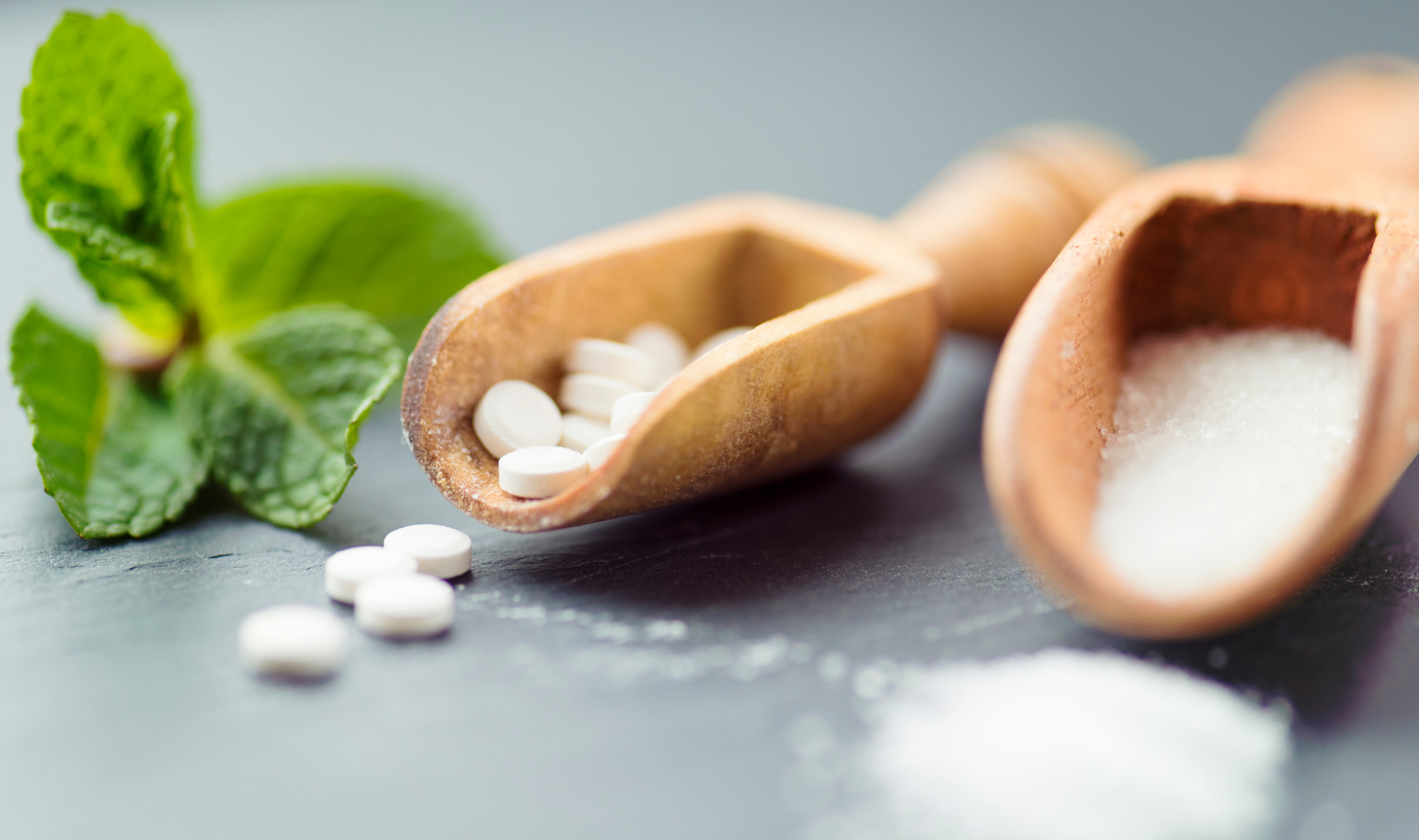
If you've ever stood in the baking aisle squinting at a bag of monk fruit, stevia, or erythritol wondering whether it's actually good for you – you're in good company. The sweetener world is confusing, full of conflicting headlines, and let's be honest, a little scary at times.
So let's clear it up. Here's what the latest research actually says, why I use monk fruit and erythritol blends in my recipes, and how to make smart choices that support your health goals rather than sabotage them.
What Are Sweeteners, Really?
Sweeteners are ingredients that add sweetness to food. That's it. The big difference between them comes down to two things: how many calories they contain, and how your body responds to them.
Sweeteners are used in many foods – baking, drinks, sauces, dressings, yoghurts, protein bars. The goal isn't to avoid sweetness altogether (life is meant to be enjoyed!). It's to choose options that work with your body and your health goals rather than against it.
Nutritive vs Non-Nutritive: The Key Distinction
Sweeteners fall into two camps — and knowing the difference changes everything.
Nutritive sweeteners contain calories and raise blood sugar. Think table sugar (sucrose), honey, maple syrup, coconut sugar, agave, and high-fructose corn syrup. Yes – even the "natural" ones. Your liver and pancreas don't really care whether your sugar came from a bee or a coconut.
You'll often see these referred to as added sugars or free sugars on labels and in research — and they mean slightly different things. Added sugars are sugars added to food during processing or cooking (like the sugar in a store-bought muesli bar or a jar of pasta sauce). Free sugars is a broader term used by the WHO that includes added sugars plus the natural sugars found in honey, syrups, and fruit juice — basically any sugar that's been released from its original cell structure and hits your bloodstream quickly. Both terms are worth knowing, because food companies are clever about disguising them under different names.
Non-nutritive sweeteners (NNS) contain little or no calories and have minimal impact on blood glucose. This category includes monk fruit, stevia, erythritol, allulose, and synthetic options like sucralose and aspartame.
Why Too Much Added Sugar is a Problem
Eating too much added sugar (i.e. nutritive sweeteners) – even from "wholesome" sources like honey, maple syrup, or agave – is one of the most well-established drivers of poor metabolic health in women. A landmark BMJ meta-analysis confirmed that higher intakes of “free sugars” consistently lead to weight gain, while reducing them produces weight loss.
The downstream effects pile up quickly:
Weight gain around the middle, where it's hardest to shift
Blood sugar spikes followed by crashes (hello, 3pm energy slump and cravings)
Insulin resistance, which over time can develop into type 2 diabetes and PCOS-related issues
Chronic inflammation, linked to joint pain, skin issues, and slower recovery
Disrupted sleep and poorer sleep quality from eating sugar late at night
Mood swings, fatigue, and brain fog
This isn't about fearing sugar – it's about understanding the cumulative impact of having it in everything, every day.

Where Non-Nutritive Sweeteners Fit In
For women following a low-carb or low-sugar lifestyle, NNS are a brilliant tool. They let you enjoy a cupcake, chocolate slice, or a bliss ball without sending your blood sugar on a rollercoaster – making it easier to stay in a balanced, fat-burning state and ditch sugar cravings for good.
The key word, as always, is moderation – NNS are a helpful swap, not a free pass.
Your Quick Guide to Non-Nutritive Sweeteners
The plant-based heroes
Monk fruit: zero calories, zero blood sugar impact. My favourite for baking. Often blended with erythritol because pure monk fruit is very intense on its own.
Stevia: zero calories, much sweeter than monk fruit, slight liquorice taste in some brands. Liquid drops are easier to dose than powder.
The sugar alcohols
Erythritol: ~70% as sweet as sugar, no blood sugar impact, the best-tolerated of the sugar alcohols. Very high amounts can cause mild bloating.
Allulose: bakes and browns like sugar – great for cookies. Newer to market.
Xylitol: works in gum and baking. (Toxic to dogs – keep away from pets!)
The synthetics
Sucralose: zero calories. Recent research suggests it may affect the gut microbiome with regular high intakes.
Aspartame: in most diet soft drinks. WHO classified it as "possibly carcinogenic" in 2023. I prefer plant-based options.

How I Use Sweeteners in Health with Bec Recipes
You'll notice some of my recipes use a monk fruit and erythritol blend. That combination gives you the sweetness and texture of sugar without spiking your blood glucose, feeding cravings, or stalling fat loss – and it tastes incredible.
If you want to see them in action, my sugar-freered velvet cupcakes, protein-packed chocolate fudge, and mini cheesecakes, are great places to start. They're proof that ditching sugar doesn't mean ditching dessert – and you'll find dozens more inside my Eat Cake Lose Weight eBook and programs.

What About the Erythritol Headlines?
Major regulators (FDA, EFSA, FSANZ) still classify erythritol as safe, and that hasn't changed. But I want to give you the full picture rather than stop there, because the research has moved since I first wrote this post.
You may have seen headlines that followed a 2023 study linking erythritol to heart problems. Let's unpack this.
The study found that people with higher blood levels of erythritol had higher rates of cardiovascular events. But here's what the headlines missed:
It was an observational study – it shows association, not cause and effect
Participants were already being assessed for heart disease – a high-risk group
Your body naturally produces erythritol from glucose, especially under metabolic stress. So elevated blood erythritol may have been a marker of metabolic dysfunction, not a result of eating it
A 2024 follow-up study went one step further. Researchers had healthy volunteers actually drink erythritol and measured a real, dose-dependent increase in how likely their platelets were to clot within hours of drinking it. That's a more direct finding than the 2023 study alone, and it's part of why some of the same researchers are now calling for regulators to take a closer look at erythritol, even though the official safety classification hasn't changed.
So where does that leave us? I went back and looked at our own meal plans over the last 12 months. The average Tribe member consumes around 10g of erythritol a day from monk fruit blend, most weeks closer to 6-7g per day. For comparison, the studies raising concern used single doses of around 30g in one sitting, roughly three times what we average across an entire day.
So when you look at the actual numbers, what we use every day is a fraction of what the research is raising concerns about.
One more thing worth mentioning. You may also have seen recent research on xylitol and heart health. We've never used xylitol in any Health with Bec recipe or meal plan, so that particular research doesn't apply to what we recommend.
Sensitivity to sweetness is also individual, and often eases the longer you've followed a lower sugar lifestyle. If you'd rather use less erythritol, or skip it altogether, that's always totally fine.
Monk Fruit, Stevia, Lakanto – What's the Difference?
Monk fruit, stevia, and Lakanto are all natural sugar alternatives, but they're not interchangeable. Monk fruit and stevia are different plant extracts with different sweetness levels and aftertastes. Lakanto isn't a separate sweetener at all – it's a brand name for a monk fruit + erythritol blend that swaps 1:1 with sugar.
This question comes up all the time in our community based on the sweeteners I use in my recipes, so let's clear it up:
Granular monk fruit + erythritol blend – looks and behaves like white sugar. Swap 1:1 in most recipes (smoothies, baking, sauces).
Golden monk fruit blend – looks and tastes like brown sugar. Perfect for cookies, banana bread, sticky sauces, anywhere you'd use brown sugar.
Powdered (icing) monk fruit – for frostings, dusting, no-bake cheesecakes – anywhere you don't want a gritty texture.
Pure monk fruit extract – extremely concentrated. A pinch replaces a tablespoon of sugar. Usually blended with erythritol or another bulk ingredient if substituting in baking.
Stevia – much more intense than monk fruit, with a slight liquorice note in some brands. Liquid drops are easier to dose evenly than powder.
Lakanto and Whole Earth – not different sweeteners, just popular brands of monk fruit + erythritol blend. Their classic versions swap 1:1 with sugar; Lakanto's "Golden" is the brown-sugar replacement.
Morlife Monk Fruit + Fibre Sugar Replacer – If you prefer to avoid erythritol, I love using this brand as it gives me a boost of fibre too! (You can get an exclusive 15% off with code ‘HEALTHWITHBEC’ at checkout Click here to buy.)
Golden rule: always check the label before you swap – some blends are 1:1 with sugar, others are twice as sweet, and pure extracts are far more concentrated again. When in doubt, start with less and taste as you go.
The Takeaway
You don't need to fear sweetness. You don't need to struggle your way through life avoiding every bite of something delicious. What matters is what you reach for and how often.
Choosing non-nutritive sweeteners like monk fruit, alone or in a moderate erythritol blend, as part of a whole-food, real-ingredient way of eating, is still a smart, sustainable strategy that supports your blood sugar, your hormones, your waistline, and your sanity.
Ready to Make This Stick?
If you're ready to truly reset your relationship with sugar and feel the difference in your body, the 3 Week Body Reset is the perfect place to start. It's three weeks of done-for-you meal plans – no calorie counting, no guesswork – just real food that breaks the sugar cycle and leaves you feeling lighter, calmer, and back in control. Every recipe uses exactly this approach, so you never have to think about whether you're eating the right thing. Check it out here and see if it sounds like what you've been looking for.
Already inside the Tribe? Head back in – your monthly meal plans and recipes are built around this exact approach.
Author Bio
Bec Miller is a qualified nutritionist (Bachelor of Science in Nutrition), women’s weight loss specialist, and founder of Health with Bec. After years of struggling with her own gut health, energy, and weight, Bec developed a proven approach to sustainable weight loss for women – without restriction, hunger, or the yo-yo dieting cycle. She has helped 50,000+ women worldwide reduce bloating, lose weight, and finally feel like themselves again, and has followed her own approach for over 11 years. Her program is approved by Dr Will Bulsiewicz MD MSCI, Award Winning Gastroenterologist and 2x New York Times Bestselling Author, and holds a 4.9 average star rating from over 3,000 Google Reviews.
Medical disclaimer
This content is for educational and informational purposes only and is not intended as medical advice. Always consult your healthcare provider before making changes to your diet or lifestyle, particularly if you have a medical condition or are taking medication.